25 February 1957 – 4 June 2025
Timothy Dutton
CBE KC
Barrister · Leader of the South Eastern Circuit · Founder of the Keble Course
Without firm foundations, the whole house will fall.
In Loving Memory
A Life Given to the Law
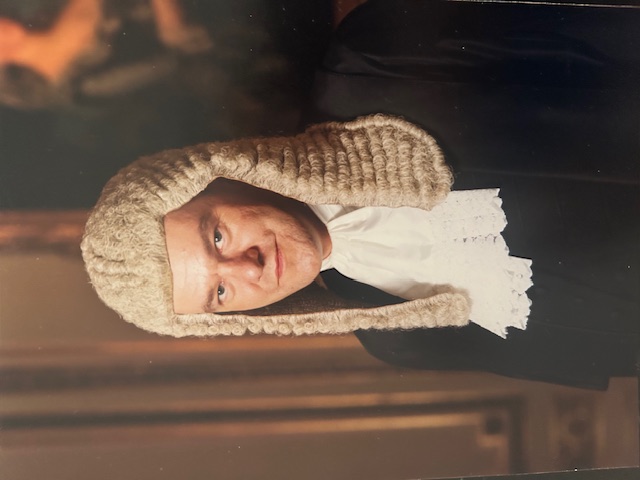
Timothy Dutton CBE KC
Timothy Dutton CBE KC was a man of uncommon gifts: a barrister of the highest distinction, a leader of rare humanity, and a friend whose warmth touched every life he met. For thirty years he shaped the advocacy of generations, not from the bench or the boardroom, but from the floor of a college hall in Oxford, where he believed, with quiet certainty, that excellence could be taught and collegiality must be preserved.
Born in 1957, Tim read Jurisprudence at Keble College, Oxford, before making his mark at the Bar of England and Wales. He became Leader of the South Eastern Circuit, was appointed Commander of the Order of the British Empire, and took Silk — but none of these honours defined him so completely as the Course he founded: a week each August at Keble, where the very best advocates of the day gave their time freely, so that every new generation might begin with firm foundations.
He died on 4 June 2025, aged sixty-eight, after a valiant struggle with motor neurone disease. He is survived by his wife Sappho and their daughter Pia, by the dogs he loved, by countless friends across the profession, and by the Keble Dutton Course — which continues in his name, as it must.
Photographs
A Life in Pictures
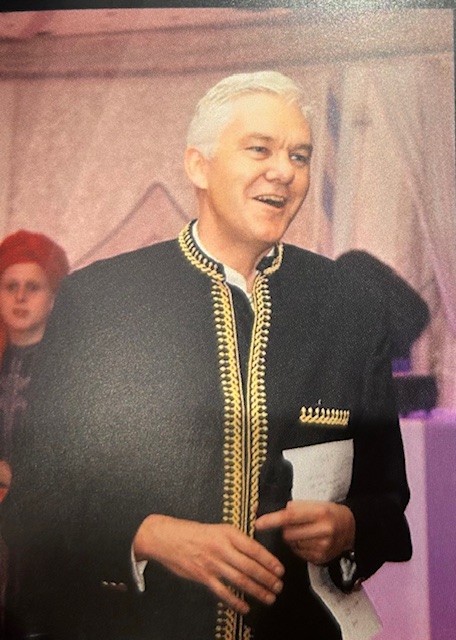
A warm smile in ceremonial dress — remembered in a moment of joy In formal robes and wig — a dignified portrait of quiet character 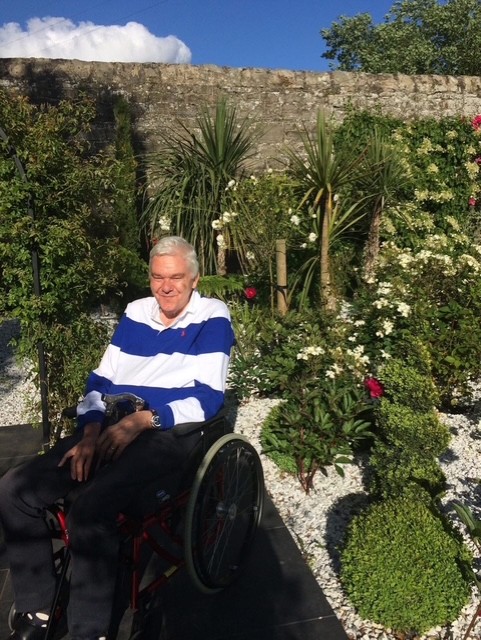
Smiling in the garden, surrounded by light and life 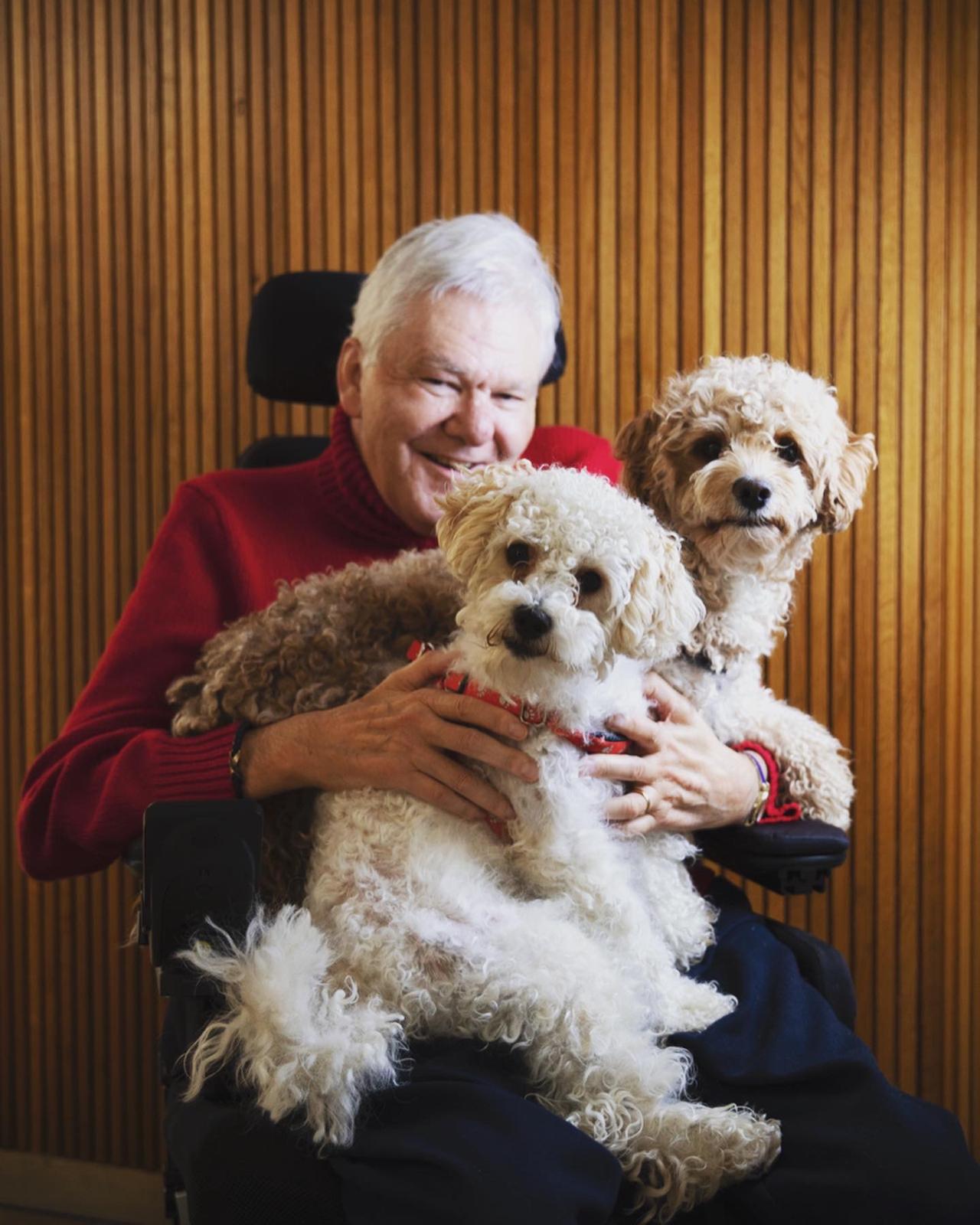
A gentle smile shared with beloved companions 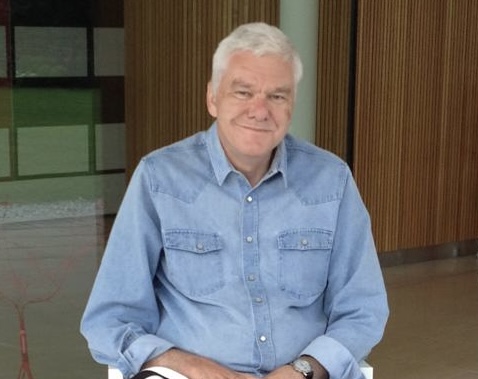
Relaxed and warm — a smile that lit every room 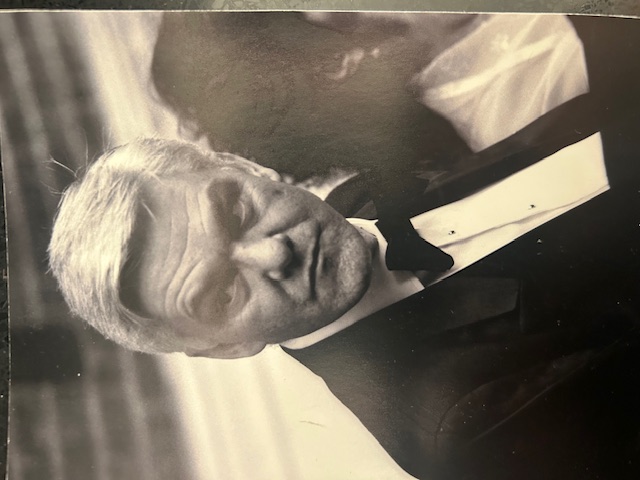
In black tie — a portrait of quiet authority
In His Own Words
A Tribute in Video
In 2021, as he neared the end of his life, Tim was interviewed by Sarah Clarke KC, Keble Course Director 2022–2024. He was asked what he was most proud of amongst his many and varied achievements. His unhesitating reply was “setting up the Keble Course.”
Remembrance
His Living Legacy
The Keble Dutton Course continues to be delivered each August at Keble College, Oxford. It remains the South Eastern Circuit's flagship advocacy programme, drawing practitioners from across England and Wales and from jurisdictions far beyond these shores — a testament to the reach of one man's vision.
The Course stands as an enduring monument to Tim's unshakeable conviction that excellence in advocacy can be taught; that the Bar must remain, above all, a collegial profession; and that every generation of practitioners deserves the privilege of learning from those who have gone before. He believed this not as an abstraction, but as a living duty — and he gave thirty years of his life to its fulfilment.
Those who attend the Course experience directly the principles Tim held most dear: painstaking preparation, rigorous critique delivered always with kindness, and an absolute, uncompromising commitment to ethical practice. In submitting themselves to its discipline — and its occasional discomfort — they honour his memory in the finest manner possible.
It begins with Keble.
The Keble Dutton Course continues to be delivered in Tim's name, reflecting his enduring commitment to excellence and to the collegial spirit upon which the independent Bar depends. So long as the Course endures, so too does he.
Timothy Dutton CBE KC, barrister and former Leader of the South Eastern Circuit, was born on 25 February 1957. He read Jurisprudence at Keble College, Oxford, where he formed the friendships and convictions that would shape his life's work. He was appointed Commander of the Order of the British Empire and took Silk, building a practice that ranged across the full breadth of the common law. He died of motor neurone disease on 4 June 2025, aged sixty-eight. He is survived by his wife, Sappho Dias, and their daughter, Pia Dutton, and by the profound and lasting affection of all who had the good fortune to know him.
Friendship & Remembrance
Flowers for Tim
Yellow roses speak of friendship, joy, and new beginnings. Purple irises carry devotion and wisdom. Lavender whispers of admiration and grace. Alstroemeria, the Peruvian lily, embodies lasting loyalty. Together they form a garden for a man who was, above all, loved.

Yellow Rose
Friendship • Joy • New Beginnings
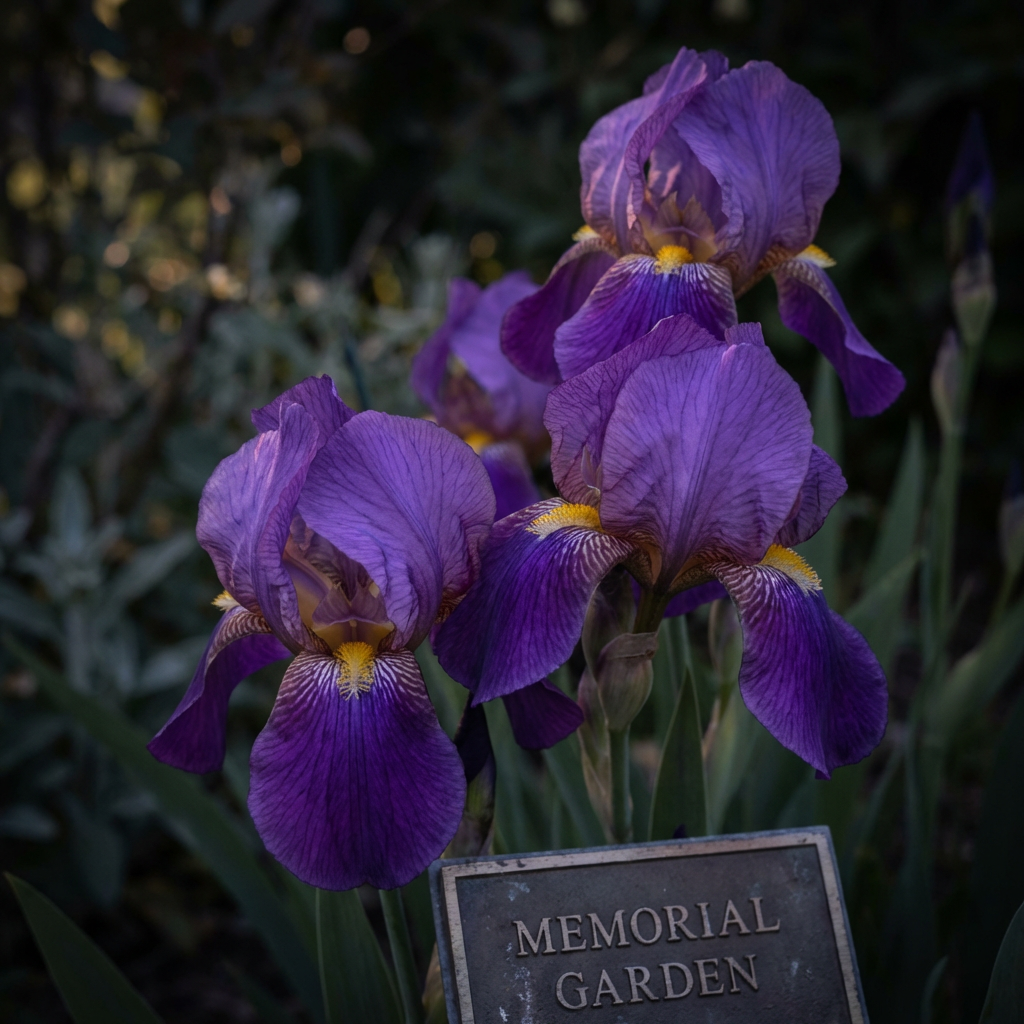
Purple Iris
Devotion • Wisdom • Admiration

Lavender
Admiration • Grace • Remembrance

Sunflower & Alstroemeria
Loyalty • Warmth • Lasting Friendship

For a man who was, above all, loved.
Written by Sappho Dias & Pia Dutton
The Keble Dutton Course:
Founding Foundations
31 October 2025
There is a circularity to the pursuit of excellence. It begins with Keble.
The year is 1975. An eighteen-year-old boy arrives at the Gothic College, full of hope and determination. A happy three years are spent learning jurisprudence at the side of Jim Harris FBA, rowing (and sinking) the Keble 4th boat, discussing politics with Sir Peter North and befriending David Etherington KC. The boy emerges from his BA inspired, resolved, and full of public spirit. Ready now to make his mark on the legal profession: he is Timothy Dutton CBE, KC.
The year is 1990. The belief at the Bar of England and Wales is that great advocates are born, not made. This belief is reflected in the Bar School course (there was then only one provider, which was the Inns of Court School of Law, where the oral presentation element is confined to one short mitigation). There was no teaching of “advocacy” or how to become a truly persuasive lawyer. One brave barrister had written a very short book on advocacy, but it formed no part of the curriculum and only the very diligent student read it. The Americans and an Australian couple were ahead of the game then. The Americans had set up a programme called the National Institute of Trial Advocates (“NITA”), which sought to nurture advocacy skills in aspiring trial lawyers. NITA did not have a formal college; instead, for its faculty, it recruited famous trial attorneys and they volunteered, pro bono, to train up budding young lawyers. One Australian, George Hampel, attended this programme in America with his wife Felicity and he had just started to export advocacy training to the Inns under a scheme he called the “Hampel Method”.
Tim was then aged thirty-three, not yet a silk, and in practice in a general Common Law set where a dozy approach was taken to advocacy. In practice then was Anthony Scrivener QC, who was also Chairman of the Bar at the time. Tony's reputation was as a lawyer of the highest possible distinction. He had been prevailed upon by NITA to attend a week-long course they were running in Florida. This invitation to Tony was further to NITA's ethos that only the very best advocates of the day should be engaged as faculty. Tony, in 1990, had twice been to teach on the Florida course. He was a barrister of considerable brilliance with a practice which traversed the whole gamut of the Law, ranging from criminal trials to esoteric Revenue cases. He would deploy lateral thinking to artfully argue that the manner in which language is construed in a contractual context should inform statutory or regulatory interpretation. He went frequently to what was then the House of Lords.
In 1990, Tim had been married to Sappho Dias for three years. Pia, their daughter, was two years old and very interested in Mary Poppins. Sappho had completed her pupillage in Tony Scrivener's Chambers and the two-year-old Pia visited often. On one occasion, she asked “Mr Scrivener” (as a great authority on everything) whether Mary Poppins existed in “real life”. Tony assured her that she did, and en passant, he said Pia could see this for herself in Disney World as he was surrendering his place on the NITA Florida course to Tim. It should be recorded that this was a deeply magnanimous gesture by him. This was the first time that Tim attended NITA as faculty. History does not relate whether Pia found Mary Poppins in Disney World, but she would one day meet the son of David Tomlinson (Mr Banks) who became Sappho's roommate in Chambers. From such fortuitous encounters are the genesis of great institutions made.
Tim was invited back as faculty on the NITA course for four successive years. There were occasions when he surrendered his place to others — among them Geoffrey Nice KC and HHJ Toby Hooper KC. However, as Disney World was thrown in as a fee, it was a good programme to attend for two struggling barristers with a small child.
The year is 1993. David Penry-Davey QC was in the second year of his three-year term as Leader of the South Eastern Circuit. He, and his wife Judy, were invited to dinner at the Dutton household in Pimlico. The Duttons had just returned from America and the talk was of the NITA course and how instructive and useful it was. David listened in his usual thoughtful way and asked Tim whether it was feasible for the South Eastern Circuit to run a similar course in the United Kingdom. He gave Tim permission to explore all avenues.
Choosing the venue was straightforward. NITA had run all of its courses at universities where plenary sessions could be held in large auditoriums and where smaller rooms were available, out of term, for one-to-one video reviews. In addition, it would be easy to house the faculty under one roof. An important feature of the courses was that trainers should mingle with the participants over meals and drinks. Tim knew, as a place conducive to true excellence, that the UK course should be housed at Keble College. He approached the College's Bursar about the costs involved, which were initially prohibitive. Ever the silver-tongued advocate, he persuaded the College to charge less than the commercial rate for the first year of the Course.
The Circuit did not have sufficient funds to subsidise the inaugural year (1994), so Tim went off to see his bank manager at, then, Midland Bank. After some tough negotiations, the bank agreed that they would subsidise the Course providing they were given a half-hour plenary session with the young participants where they could talk about the benefits of banking with them. This was quickly agreed.
The venue and the funds were now arranged. There remained the thorny issue of the faculty. Tim was thirty-eight years old. He was not a silk. He was not in a magic circle Chambers then. And who could blame the older silks, now entrenched in the “Hampel Method” at the Inns, for viewing him with suspicion? Not daunted, Tim and Sappho wrote to the leading advocates of the day, inviting them to come as faculty to Keble, for one week, pro bono. To their astonishment, all those contacted responded with enthusiasm and accepted. Finding juniors to come along as trainers was easier, and the wide circle of their friends all accepted. Everyone was excited to contribute to what they saw as a programme which would be advancing excellence at the Bar.
The final hurdle was the writing of the problems which would form the brief for the participants. There had to be two types of cases, because the Bar was beginning to split into civil and criminal practitioners. Because the cases would end in mock trials on the last day of the Course, the problems had to be balanced — some facts would favour the plaintiff's (as he then was) case and some would favour the defendant. So also with the criminal case: some facts would favour the prosecution and others would favour the defence. There were not many volunteers for the writing of the cases, so in the end Tim sat down to write the civil case and Sappho the criminal. Tim also co-wrote the expert medical problem with his treating endocrinologist (as he was a Type 1 diabetic), Professor Peter Sonksen. Mercifully, the financial expert problem was written by the accountants, Deloitte.
As the Bar became increasingly specialised, Tim and Sappho resisted all attempts to make the Course more “practice specific”. They maintained that good advocacy had little to do with particular expertise, and everything to do with careful preparation, concision, artful persuasion, strict accuracy and, above all, ethics. What is more, Tim watched as Sappho struggled. As a five-foot-one, Asian, female member of the Criminal Bar in the 1990s, life was not the picnic it was at the Civil Bar. Tim never lost sight of that. The strain of continued cuts to Legal Aid and the plight of young Criminal barristers were close to home. To his mind, there could only be a benefit in all disciplines coming together over a week-long course, encouraging discussion across all areas of the profession.
At around eight years old, Pia began to ask questions about the Course: “why do you disappear every summer?”, “how much training does one lawyer really need?”, and “why don't we go to Disney World anymore?!” (what a brat). Tim answered with one sentence: “Without firm foundations, the whole house will fall.” Not satisfied with that, she continued to badger both parents about their annual absence. Charged on two counts of (1) Incessant Whining and (2) Spoilt Brattery, she was duly sentenced: “This year, you will be playing the vulnerable witness.” She was examined-in-chief by Michael Lawson KC (video statements in chief did not then exist) and cross-examined by David Etherington KC.
From then on, Keble became an annual family pilgrimage. Each year the Duttons attended — whether as director, trainer, helper, musician, juror, or witness (vulnerable or otherwise). Each year, the August Bank Holiday week was reserved for Keble. Was that because the rigour of the Course was addictive? Was it because of some prescient feeling that Tim would not be here for very long? Perhaps. But the real reason was because without fail, every single year, it was possible to learn something new. As the participants battled the pressure of performing in front of peers and revered members of the judiciary, and bravely submitted themselves to the trauma of public critique, lessons were there for the plucking. Infallibly, all lawyers — whether participant or trainer — left better advocates than they had arrived.
In 2024, Pia attended the Course, at last, as a participant. Even with all the years of having crashed the Course before, she still found herself on the phone to Tim and Sappho demanding, “who are the sadists who set this thing up?!” Of course, Tim and Sappho had raised a sensitive racehorse. But she was not the first participant to panic, feel the pressure, and begin to buckle, nor will she be the last. Overall, of course, the experience was invaluable. As usual, trainers found creative headlines and gave deft demonstrations, as if it were nothing. Far from the repetitive guidance of “closed questions”, cultured pearls were handed out — such as “Wimbledon”, to improve pace and precision in cross-examination, and “Mummy says no”, to encourage confidence to occupy authoritative space during witness handling.
The year is 2025. Tim has passed away after a valiant battle with Motor Neurone Disease. Pia attends the Course again. As the participants assembled — as usual, full of nerves and anticipation — the pressure was off (for this year at least). So she started listening to the conversations around her with a little more care: some at dinner in hall, some out on the quads and some during the plenary sessions. To her profound shame, what she learned shocked her: brief fees which are less than travel costs; a cap on Civil Legal Aid which has been in place since 1996; the Cyber Attack resulting in a freeze on all fees; and inadequate safeguards for young members of the Bar visiting clients in crowded cells. Her ignorance was shameful but, sadly, perhaps not exceptional.
Justice itself is under siege and the war is being fought by half the army. There can be no criticism of the sleeping soldiers. What is unknown cannot be fought. However, it is incumbent upon all barristers to take up arms to support the Circuits, the Bar Council, and the profession as a whole, as it fights to maintain its high standards.
With an ever more specialised Bar has come isolation and a seeming lack of professional empathy. As the civil sectors soar through all the benefits of Covid, various banking crises and the booms brought about by the fallout from Brexit, the publicly funded Bar suffers. The decline in collegiality is regrettable. But it is not inevitable. It is open to all practitioners to remember their roots, to reach out to their old Bar School friends at other sets of Chambers, to speak to leaders or juniors in other Inns, and to join the new mentoring schemes designed to give comfort and guidance to the Young Bar. We must remember that without a determined collective consciousness there is a threat to the Independent Bar, and, then, to the Rule of Law itself.
In 2021, as he was nearing the end of his life, Tim was interviewed by Richard Coleman KC. He was asked what he was most proud of amongst his many and varied achievements. His unhesitating reply was “setting up the Keble Course”.
Keble is now the “Keble Dutton Course”. A wonderful tribute to a man who gave his all to a profession he loved. We must continue to preserve it. Of course:
“Without firm foundations, the whole house will fall.”
How to correct our professional separatism? How to reinforce the legal community and remember that we are One Bar, with a fervent belief in equal representation before the Law and Justice? We return to honing the craft on which livelihoods depend and invest our time in discussing, and combatting, the problems faced by all of our colleagues. Where and how does that take place?
It begins with Keble.